Back to Korean Language Program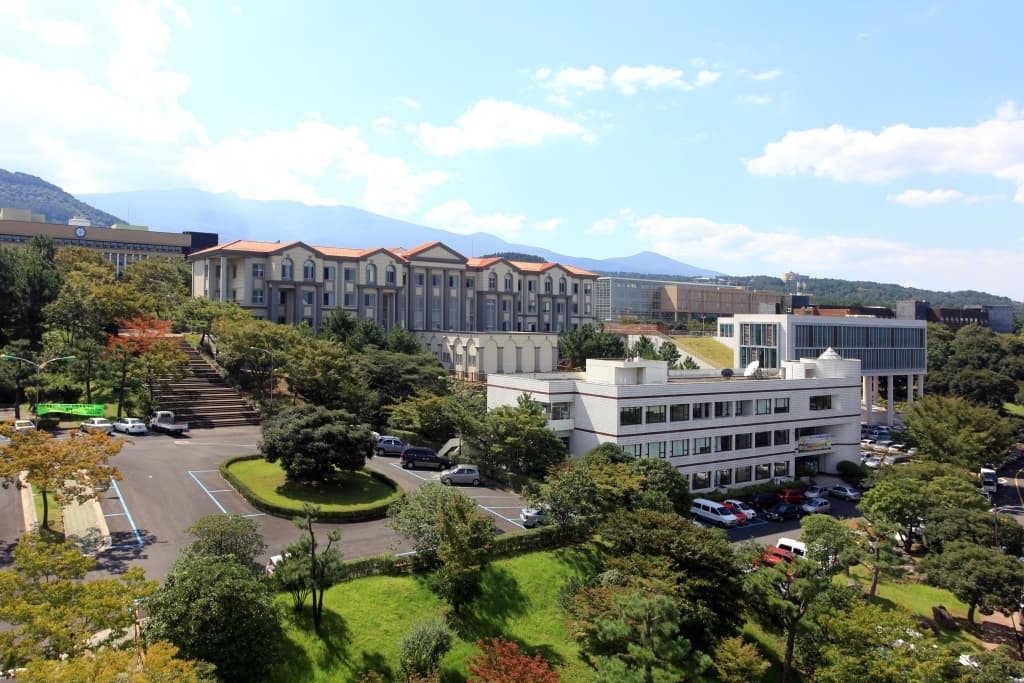 Ask AI
#14Korean Language Program
Jeju National University Korean Language Institute
Jejuuniversity10 weeks/term (4 terms/year)
KGSP ScholarsInternational StudentsUniversity PathwayDegree Program Applicants
“IEQAS Superior Certified (우수 인증) Korean language program at Jeju National University — top-tier pathway to Korean university degrees”
10 weeks/term (4 terms/year)
Duration
Korean (한국어)
Language
~15
Class Size
Superior ✓
IEQAS
Not required
Work Exp
Certificate of Completion
Degree
8%
Int'l Students
Why This Program
Award
IEQAS Superior Certified (우수 인증)
Government-verified superior quality. Additional benefits including KGSP scholarship priority and streamlined visa processing.
Languages
Korean Language Track Certified
Officially certified to accept international students for Korean language training (D-4 visa eligible).
GraduationCap
Degree Program Certified
University pathway — complete Korean language courses then transition to undergraduate or graduate degree programs.
MapPin
Located in Jeju
Regional university with potentially lower living costs and authentic Korean cultural experience.
Jeju National University Campus
Cost & ROI
Tuition₩5.2M/year (₩1.3M/semester)
Your Cost~₩1.3M/term (estimated, national, Jeju)
💰 Scholarship: KGSP scholarship priority. Tuition reduction possible for outstanding students.
Living Cost
Monthly in Seoul: ~₩1.0–1.5M (~$750–1,100 USD)
Visa Pathway
D-4 Language
During Korean course
10 weeks/term (4 terms/year)
→
D-2 Student
After TOPIK 3+
Degree program
→
D-10 Job Search
After graduation
Up to 2 years
✅No Korean proficiency required for Level 1 entry
✅Part-time work allowed on D-4 visa (20hr/week after 6 months)
ℹ️D-4 language training visa. Part-time work allowed (up to 20hrs/week after 6 months). Homepage: https://www.jejunu.ac.kr
Before You Come — FAQ
Common questions from international students planning to study Korean in Korea
What visa do I need?
You need a D-4 (Language Training) visa. Required documents: passport, standard admission letter from the university, bank statement (~$10,000 USD), high school diploma, and visa application form. Processing takes 3-4 weeks. Apply at the Korean embassy in your country after receiving your admission letter.
Can I work part-time?
Yes, after 6 months of study. You need TOPIK Level 2 or higher and permission from your university's international office. During the semester: up to 20 hours/week. During vacation: no hour limit. Minimum wage in 2025 is ₩10,030/hour (~$7.50 USD).
How much does it really cost? (Total)
Typical total cost for 1 year (4 terms): Tuition ₩5.2-7.2M + Dormitory ₩2.4-4.8M + Living expenses ₩4.8-9.6M + Insurance ₩0.9M + Textbooks ₩0.2M = Total ₩13.5-22.7M (~$10,000-17,000 USD/year). Seoul is 30-40% more expensive than regional cities.
Where will I live?
Options: 1) University dormitory (₩600K-1.2M/semester, apply early — limited spots), 2) Officetel/studio near campus (₩400-700K/month in Seoul, ₩250-400K in regional cities), 3) Shared housing/goshiwon (₩300-500K/month). Most universities guarantee dormitory for first-term language students.
Do I need health insurance?
Yes, mandatory. All foreign students must enroll in Korea's National Health Insurance (NHIS) within 6 months of arrival. Cost: ₩76,390/month (2025). Covers 70% of medical expenses at hospitals and clinics. Some universities require private insurance for the first 6 months.
I don't speak any Korean — is that okay?
Absolutely. All programs start from Level 1 (complete beginner). Classes are taught using immersive methods with visual aids. After 1 year (4 terms), most students reach TOPIK Level 3-4, enough for university admission. Airport pickup and orientation are usually provided in English.
What if my visa is rejected?
Most universities refund 100% of tuition (minus non-refundable application fee of ₩60-120K) if your visa is rejected. Always confirm the refund policy before paying. IEQAS-certified universities have higher visa approval rates due to government verification.
Can I enter university after completing the language program?
Yes — this is the main pathway. Most universities require TOPIK Level 3 for undergraduate and Level 4 for graduate admission. After completing Level 4-5 at the language institute, you can apply directly. Some universities waive TOPIK if you complete their own Level 4+ program.
What is IEQAS certification and why does it matter?
IEQAS (International Education Quality Assurance System) is the Korean government's quality certification. Benefits: faster visa processing, part-time work eligibility, KGSP scholarship priority, and higher visa approval rates. Always choose an IEQAS-certified institution — all universities listed on this page are certified.
Is Korea safe for international students?
Korea is one of the safest countries in the world. Low crime rates, 24/7 public transportation in major cities, and dedicated foreigner support hotline (1345). Universities have international student offices for emergency assistance. Many students from Vietnam, China, Mongolia, and Central Asia study safely in Korea.
How to Apply
📅 IntakeSpring (Mar) & Summer (Jun) & Fall (Sep) & Winter (Dec)
🗣️ KoreanNo prerequisite — Level 1 entry
Required Documents
High school diploma or equivalentValid passportD-4 visa (language training)No Korean language proficiency required for Level 1
Questions about Jeju National University Korean Language Institute?
Ask Dr. Admissions about admission, scholarships, visa, and career outcomes.